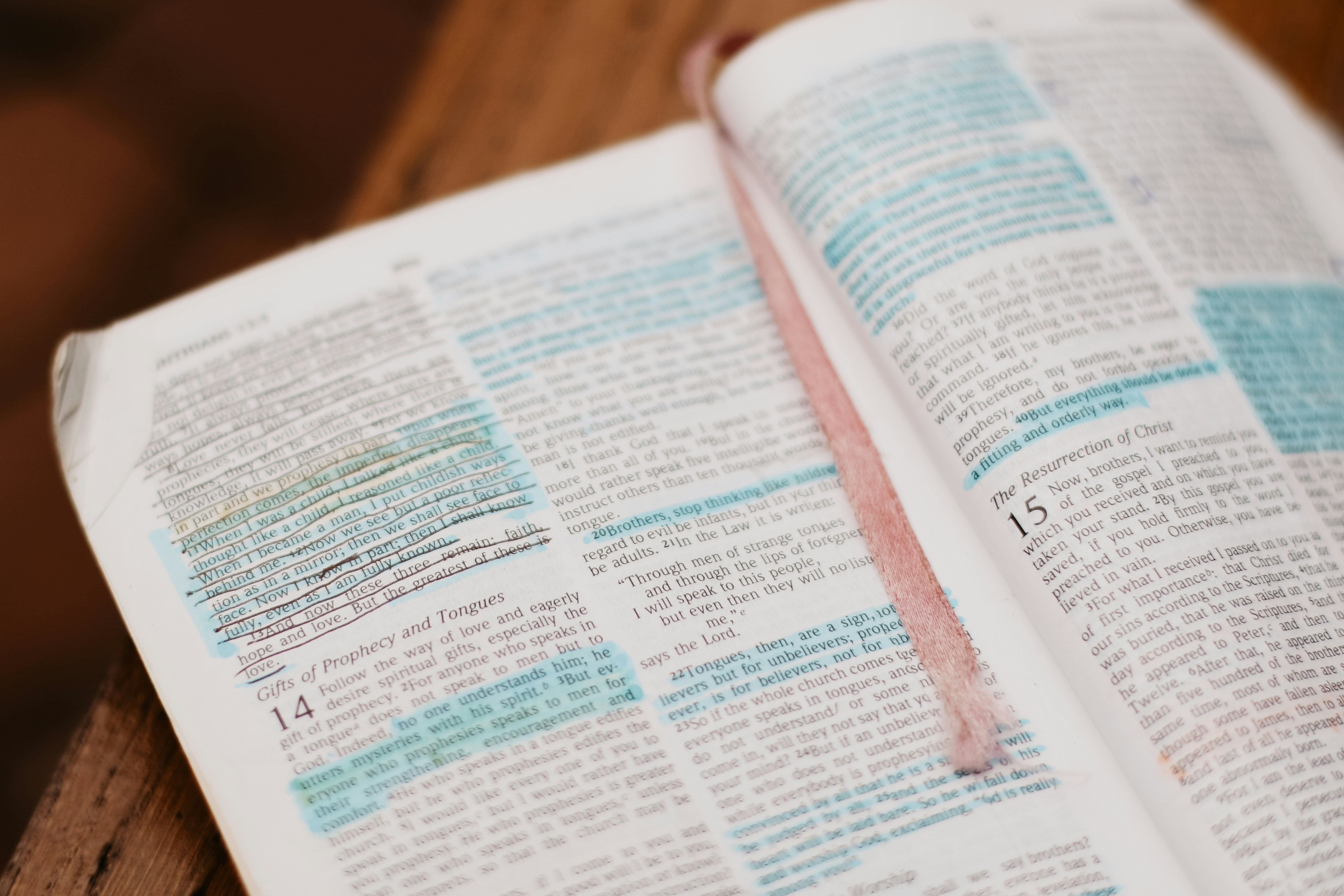
You Need a Routine to Thrive
Thriving is rarely the result of occasional bursts of motivation. It is often built through simple, faithful patterns repeated over time. From the routines of Jesus and the early believers, we learn that what matters most deserves a consistent place in our lives.

Article by Jo Gamel
Contributor·10 August 2026·10 min read

Everyone wants to thrive in life.
Beyond the achievements we hope to attain, there is a deeper sense of fulfilment that human beings desire. We want to know that our lives are meaningful, that we are making progress and that we are becoming what we were created to be. For this reason, there can be a particular kind of frustration in knowing that we are capable of more but repeatedly failing to do what we know we should do.
The Christian understanding of life gives us reason to believe that we were created for more than mere existence. Paul writes that we are created in Christ Jesus for good works (Ephesians 2:10). God has given us a life to live, responsibilities to carry and good works to accomplish.
Jesus understood His life in these terms. He said, My food is to do the will of Him who sent Me, and to finish His work (John 4:34, NKJV). His sense of fulfilment was closely connected to accomplishing the work entrusted to Him by the Father. The apostles likewise devoted themselves to preaching the Gospel, serving the Church and advancing the Kingdom of God.
Yet there is something easy to overlook when we consider the lives of Jesus and the early believers. Their extraordinary work was accompanied by ordinary patterns.
They had routines.
The Rhythm Behind a Purposeful Life
The Gospels show us that Jesus did not live randomly or without structure. Mark 1:35 records that He rose early, went to a solitary place and prayed. Luke 4:16 tells us that He went into the synagogue on the Sabbath as His custom was. Prayer and participation in worship were not occasional activities that appeared only when circumstances demanded them. They were established parts of His life.
We see something similar among the apostles and the early believers. Peter and John went to the temple at the hour of prayer (Acts 3:1). The early church devoted itself to the apostles' doctrine, fellowship, breaking of bread and prayers (Acts 2:42). They continued to meet together, sharing meals and worshipping God (Acts 2:46).
There was therefore a rhythm to their lives.
This is significant because great things are rarely sustained by occasional bursts of enthusiasm. Purpose may tell us where we are going, but routine often determines whether we will consistently move in that direction.
What Is a Routine?
A routine is a regular pattern of doing things. It may involve a particular time, sequence or frequency, but its defining feature is consistency.
Routine is sometimes associated with monotony, as though a structured life must necessarily be an uninteresting one. But routine is not the same as rigidity. A routine simply gives important things a reliable place in our lives.
This principle can be seen in the human body.
The body contains several systems that work together in an organised way to sustain life. The circulatory system, for example, continually moves blood throughout the body, with the heart repeatedly contracting and relaxing to keep blood flowing.
Imagine if the body's essential processes operated entirely at random. Imagine if the heart worked according to an unpredictable pattern, or if digestion, breathing and other necessary functions occurred without any coordination. The body would not be able to function properly.
The point is not that every biological process operates at exactly the same rate every moment. Rather, the body demonstrates something important about life: healthy functioning depends upon order, coordination and consistent processes.
Our lives also require patterns.
We cannot rely on motivation alone to sustain everything that matters to us. Motivation fluctuates. Circumstances change. Energy levels rise and fall. There will always be days when we do not feel like doing what needs to be done.
A routine helps us continue even when motivation is absent.
A Rhythm in Creation
The creation account in Genesis gives us another picture of order and rhythm.
At the beginning, the earth was without form, and void; and darkness was on the face of the deep (Genesis 1:2). God then began to bring order to His creation. He separated light from darkness, calling the light Day and the darkness Night. The account repeatedly records the pattern of the evening and the morning.
Later, God created the sun, moon and stars to govern the day and night and to mark signs and seasons, and for days and years (Genesis 1:14).
Creation therefore contains rhythms that provide order to life. Day follows night. Seasons come and go. There are appointed times and recurring patterns.
This does not mean that everything in creation is predictable or unchanging. Rather, it shows that God established order and rhythm within the world He created.
There is a lesson here for us. What matters should not always be left to chance.
If something is important enough to be part of our lives, it may be important enough to deserve a consistent place in our lives.
Routine Turns Intention into Practice
Most people have things they genuinely want to do.
We want to pray more. We want to study Scripture more consistently. We want to exercise. We want to become better stewards of our finances. We want to spend more time with our families. We want to work more diligently. We want to develop our gifts.
The difficulty is that good intentions do not automatically become good practices.
A person can sincerely desire to read the Bible every day and still go weeks without doing so. Someone can genuinely want to become physically healthier and still struggle to exercise consistently. A person can deeply value their family and yet continually find that work and other demands consume the time they intended to give them.
Routine helps close the gap between what we intend to do and what we actually do.
When we establish a regular time for prayer, prayer becomes part of the structure of our lives rather than something we simply hope to find time for. When we establish a regular opportunity to review our finances, financial stewardship becomes a practice rather than a vague intention. When we deliberately create time for family, our relationships are less likely to receive whatever time happens to remain after everything else has been done.
Routine gives intention a structure.
The Small Things Matter
One reason people struggle with routines is that they often try to change too much at once.
A person decides to completely transform their spiritual life, physical health, finances, productivity and relationships simultaneously. They create an ambitious schedule and attempt to follow it perfectly. For a few days, everything goes well. Then life becomes demanding, the routine becomes difficult to maintain and eventually the whole plan is abandoned.
A sustainable routine does not need to be impressive. It needs to be faithful.
Fifteen minutes of consistent prayer may be more valuable than an ambitious prayer schedule that lasts for three days. A regular review of one's finances may be more useful than a once-a-year attempt to understand where all the money has gone. Consistent time with family may matter more than occasional grand gestures.
Small actions, repeated faithfully, can shape an entire life. This is one of the reasons routine is so powerful. It takes something that may appear insignificant in isolation and gives it significance through repetition.
Routine and the Life of Faith
For the Christian, routine should never become an empty ritual.
Jesus Himself warned against religious practices that had become external performances without genuine devotion to God. The purpose of a spiritual routine is therefore not simply to complete a list of activities. It is to create regular opportunities to seek God, know His Word and live in obedience to Him.
Jesus had a custom of attending the synagogue, but His life was not reduced to religious routine. He withdrew to pray, yet He remained attentive to people around Him. He followed patterns, but He was not imprisoned by them.
This is an important distinction.
Routine should serve purpose, not replace it.
A person can read the Bible every morning without allowing the Bible to change them. A person can attend church every week without growing in their relationship with God. A person can maintain an impressive schedule and still fail to live meaningfully.
The goal is therefore not simply to become more disciplined. The goal is to use discipline to make room for what matters.
What Should Have a Place in Your Routine?
There is no universal routine that will work for everyone. Our responsibilities, seasons of life and circumstances differ.
But there are areas of life that deserve intentional attention.
Our relationship with God deserves time. Our bodies need care and rest. Our families and friendships require investment. Our work and calling require diligence. Our finances need stewardship. Our minds need learning and renewal.
The question is not whether every one of these things must be given the same amount of time. They cannot be.
The question is whether the things we say matter to us have any intentional place in the way we live.
Sometimes the reason we are not progressing is not that we lack desire. It may be that we have never established a pattern that supports that desire.
We keep waiting for the right moment to pray. We wait until we feel motivated to exercise. We wait until we have more time to read. We wait until life becomes less busy to spend time with the people we love.
But life rarely becomes permanently less busy.
At some point, we have to decide what deserves a place in our lives and create a pattern that reflects that decision.
Thriving Through Faithful Patterns
Thriving is often imagined as the result of extraordinary moments: a major opportunity, a significant achievement or a breakthrough that suddenly changes everything.
But much of what makes a life fruitful is far less dramatic. It is waking up and praying again. It is opening the Scriptures again. It is doing the work again. It is saving again. It is exercising again. It is calling the person you love again. It is showing up again. It is doing the right thing repeatedly, even when nobody is watching and there is no immediate reward.
The lives of Jesus and the early believers remind us that extraordinary purpose can be sustained through ordinary patterns. Their lives were not marked only by great moments, but also by practices they returned to repeatedly.
Perhaps, then, the question we should ask is not simply, "What do I want to accomplish?"
We should also ask, What must I consistently do for that to become possible?
The answer may be a routine.
A routine will not guarantee an easy life. It will not eliminate unexpected circumstances or remove the need for flexibility. But it can give our lives structure, help us turn intentions into practices and enable us to remain faithful to what matters.
We do not need to accomplish everything at once. We need to establish patterns that help us faithfully do what God has entrusted to us.
A purposeful life is built not only through great decisions, but through faithful decisions repeated over time.
And if we want to thrive, we may need to stop asking only what we should do and begin asking what we should do regularly.
Jo Gamel is passionate about writing for the Gospel, making Jesus known, and encouraging others to grow in their Christian faith.
This piece reflects the author's perspective, one voice among the many who write for approvedtoGod.